


For us at Bonvivant, this is not a romantic idea, but lived practice. Head Chef Nikodemus Berger regularly goes into the forest himself to forage herbs and ingredients for our kitchen, describing this connection to nature as follows:
„We are guests in magnificent nature."We wanted to know how foraging actually works legally when you set off yourself, and where in Berlin it is even worthwhile. Here we share what we learned along the way.
- Nikodemus Berger, Head Chef at Bonvivant
Why We Forage Ourselves in the First Place
For us, foraging wild herbs has two sides: On the one hand, we obtain flavors that no producer cultivates; wilder, more concentrated, and often significantly punchier than their cultivated relatives. On the other hand, we bring knowledge into our house that we do not naturally possess ourselves. Our herbs and mushrooms come, among other sources, from Martin Rötzel, known under the name "The Monk Garden." Our team has already taken several wild herb and mushroom courses with him; we found the topic of medicinal mushrooms as a regional coffee alternative particularly exciting, where mushrooms are chopped, dehydrated, and processed through several stages into a distinct brew. Our former head bartender Elias Heintz once summed up the collaboration fittingly:„He's such a fantastic fanatic when it comes to sustainable work with plants."These courses have brought us not only new ingredients, but also a significantly heightened awareness of how to forage responsibly without damaging populations or putting oneself in danger.
- Elias Heintz, Former Head Bartender at Bonvivant
What Is Allowed in Berlin and What Is Not
Legally, foraging in Germany is fundamentally regulated by the so-called "hand bouquet rule" (§ 39 Federal Nature Conservation Act): Wild-growing, non-protected plants may be removed in small quantities for personal use, what you can comfortably grasp with one hand. For Berlin, there is a special feature that many are unaware of: In urban green spaces marked with the so-called tulip sign, the Federal Nature Conservation Act does not apply; instead, the Berlin Green Spaces Act takes effect, which generally prohibits picking plants there. The hand bouquet rule therefore does not apply in parks like Tiergarten or Volkspark Friedrichshain. The situation is different in the large Berlin forest areas: the Green Spaces Act explicitly does not apply to forest areas, meaning the hand bouquet rule remains applicable here. In nature reserves, by contrast, foraging is completely prohibited regardless of the rule, as is the case for specially protected species such as arnica, snowdrops, or wild tulips.| Location | Foraging Allowed? |
|---|---|
| Berlin Forests (e.g., Grunewald, Spandauer Forst, Tegeler Forst) | Yes, hand bouquet rule applies, small quantities for personal use |
| Urban parks with a tulip sign (e.g., Tiergarten) | No, Green Spaces Act prohibits picking |
| Nature reserves | No, regardless of location |
| Specially protected species | No, regardless of location |
Our Favorite Wild Herbs and Where We Find Them
Depending on the season, different wild herbs are of interest to us. In spring, wild garlic is one of the most popular finds in shady deciduous forests, followed shortly after by young stinging nettle shoots and ground elder, both of which are versatile in the kitchen. Over the summer, meadows and roadside edges yield yarrow, ground ivy, and dandelion; in late summer and autumn, elderberries and wild herbs like mugwort complete the picture.The large, connected forest areas on the outskirts of the city, such as Grunewald, Spandauer Forst, or Tegeler Forst, offer significantly better conditions than heavily frequented inner-city parks, not only legally, but also because the plants there are exposed to less pollution from road salt, dog urine, or exhaust fumes.
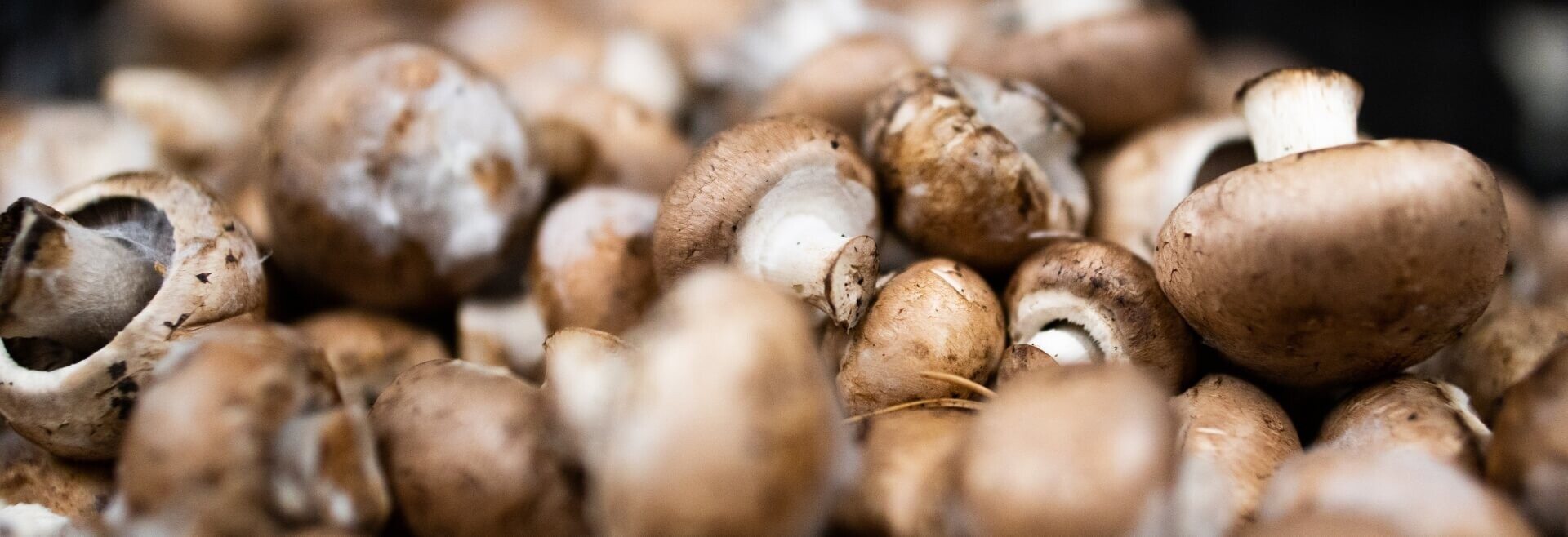
Mushrooms also belong to this category for us, even though we are even more cautious here: Porcini, chanterelles, or bay boletes can also be found in Berlin forests during good years; however, mushroom foraging requires even more experience, as misidentifications can end dangerously. Anyone interested should definitely start by going out with experienced foragers rather than relying solely on identification apps.
A Little Herbology: Berlin "Weeds" at a Glance
Much of what is pulled out as weeds in one's own front yard ranks among the most bountiful wild herbs of all. Here is a small overview of the plants we encounter most frequently in and around Berlin.| Plant | Identifying Features | Where to Find | Flavor & Use |
|---|---|---|---|
| Stinging Nettle | Serrated leaves, fine stinging hairs on stem and leaf undersides | Forest edges, roadsides, nutrient-rich soils | Nutty, spinach-like after cooking or blanching, for soups, pesto, or tea |
| Ground Elder | Three-part, serrated leaves, triangular stem | Shady gardens, forest edges, often decried as a troublesome weed | Mild, parsley-like, raw in salads or steamed like spinach |
| Dandelion | Deeply notched leaves in a rosette, yellow flower, milky sap when broken | Meadows, roadsides, almost everywhere in the city | Slightly bitter, young leaves in salad, flowers for syrup or jelly |
| Ground Ivy | Rounded, scalloped leaves, creeping growth, small violet flowers | Shady, moist spots under hedges and at forest edges | Spicy-minty, use sparingly, for herb butter or infusions |
| Wild Garlic | Slender, glossy leaves, intense garlic smell when rubbed | Shady deciduous forests, often in large carpets | Strongly garlic-like, for pesto, butter, or as a vegetable |
| Yarrow | Feathery, finely divided leaves, white flower umbels | Dry meadows, roadsides, wasteland areas | Tartly aromatic, for tea or used sparingly in salads |
| Elderberry (Flowers) | Large, white flower umbels with a sweetish fragrance | Forest edges, embankments, often along railway tracks | Flowery-sweet, for syrup, jelly, or as breading |
By the way, the scent test almost always helps with the initial assessment: Wild garlic smells distinctly of garlic when crushed, whereas its poisonous lookalikes do not. While this does not replace identification by experts, it is a good first indicator.
Safety First: Risk of Misidentification and Contamination
As tempting as free foraging sounds, a few things should be taken seriously. The classic case is confusing wild garlic with the poisonous leaves of lily of the valley or autumn crocus, which can look deceptively similar before flowering. Anyone who is not one hundred percent sure should abstain or have the plant identified by someone knowledgeable. Low-lying fruits and herbs from areas frequented by dogs also pose a risk: Fox tapeworm is transmitted through fox feces and can adhere to low-growing plants, which is why we recommend washing everything thoroughly and heating it when in doubt. Roadsides with heavy traffic are generally unsuitable for foraging, as heavy metals and exhaust residues can accumulate in the plants there.
From Forest to Plate: How We Use Wild Herbs
Wild herbs do not appear as garnish for us, but as an independent ingredient. On our current menu, for example, we combine celeriac with charcoal, wheatgrass, and wild herbs, complemented by orange peel, camelina, and smoke essence, a dish that consciously brings the earthy, slightly bitter side of wild herbs to the fore instead of hiding it. Because our menus change with the seasons, the wild herbs used shift as well: milder, young shoots in spring, and robust, spicier varieties in late summer.
Our Tips for Getting Started
Anyone wanting to start foraging does not need to head straight into the deepest forest. It pays to first participate in a guided wild herb walk, such as those offered in and around Berlin by several providers, to learn how to distinguish plants from their poisonous lookalikes directly in nature. Only with this certainty does independent foraging become genuinely enjoyable. Beginners should restrict themselves to three or four clearly recognizable plants like stinging nettle, dandelion, and ground elder instead of trying to identify too much at once, and strictly harvest only as much as needed for personal use.What This Means for Your Visit to Us
When you discover wild herbs on your plate with us, they come either from our kitchen team's own foraging trips or from Martin Rötzel and his regional network. This close connection to the Berlin and Brandenburg landscape is part of what defines our cuisine. Anyone wishing to learn more about our current menu can find all details on our website.
FAQs - Frequently Asked Questions
- Am I allowed to forage wild herbs in Berlin parks?
- Generally no. Urban green spaces marked with a tulip sign are subject to the Berlin Green Spaces Act, which strictly prohibits picking, regardless of the hand bouquet rule.
- Where in Berlin am I legally allowed to forage wild herbs?
- In large forest areas like Grunewald, Spandauer Forst, or Tegeler Forst, the nationwide hand bouquet rule applies; small quantities for personal use are permitted there, except in designated nature reserves.
- Where do the wild herbs used at Bonvivant come from?
- Partly our kitchen team gathers them directly, and partly they come from our partner Martin Rötzel alias The Monk Garden, with whom we have also taken our own wild herb courses.
- How do I recognize poisonous lookalikes of edible wild herbs?
- The safest way to learn is through a guided wild herb walk. If you are not one hundred percent sure about a plant, you should abstain in case of doubt.