

Plant-based meat alternatives have firmly arrived in the mainstream. Whether it is pea-based burger patties, soy-based pulled strips, or cold cut alternatives, these products have become a solid and straightforward staple of modern food culture. They make it easy for people to reduce their meat consumption in everyday life without much effort.
Above all, looking at the bigger picture, they are far better than any piece of meat from conventional factory farming. They save resources, protect the climate, and end the suffering of animals in industrial barns. This is an important, positive development that we at Bonvivant absolutely respect.
Despite this sensible function in daily life, you will look for these products on Bonvivant’s menu in vain. This is by no means a criticism of the products themselves, but rather the result of a conscious, deliberate decision regarding our kitchen philosophy. When we choose to forgo meat and fish at our restaurant in Berlin-Schöneberg, we do not do so to painstakingly reconstruct the taste of meat using the tools of food chemistry. We do it because we view the plant as an independent, infinite cosmos that can captivate entirely without a mask or a meaty disguise. For us, one does not exclude the other: substitute products have their place in the world, and we have our place in handcrafted gastronomy.
The Quick Everyday Lifesaver vs. the Handcrafted Experience
Modern, well-functioning meat substitutes are a wonderful invention for a hectic daily routine. They guarantee absolute consistency, are quick to prepare, and satisfy people's learned taste patterns perfectly. Anyone looking for a quick, plant-based alternative to a familiar meal after a long day at work is well served by these products. It is a pragmatic path that works and helps the environment. However, as a fine-dining restaurant, we do not see our task as mirroring this already practical everyday life. We want to create a place where you get an experience that you simply cannot pull out of a package at home between home office and a quick evening off. A perfectly simulated meat alternative is fantastic for uncomplicated cooking at home; at the restaurant, we look for a handcrafted adventure together with our guests.Our head chef, Nikodemus Berger, and the entire team do not want to demonstrate how well industrial protein powder can taste like a beef fillet. The large production facilities can already do that perfectly. Instead, we want to show how deep, multifaceted, and surprising a simple celeriac root, a humble Brandenburg bean, or a pumpkin can taste when treated with the same artisanal dedication, precision, and time that are traditionally reserved only for premium cuts of meat. Our kitchen begins where industrial standardization ends. We deliberately play with the natural characteristics of nature, the subtle nuances of the seasons, and the unmistakable signature of our Brandenburg farmers.
What We Do Instead: The Craft of Transformation
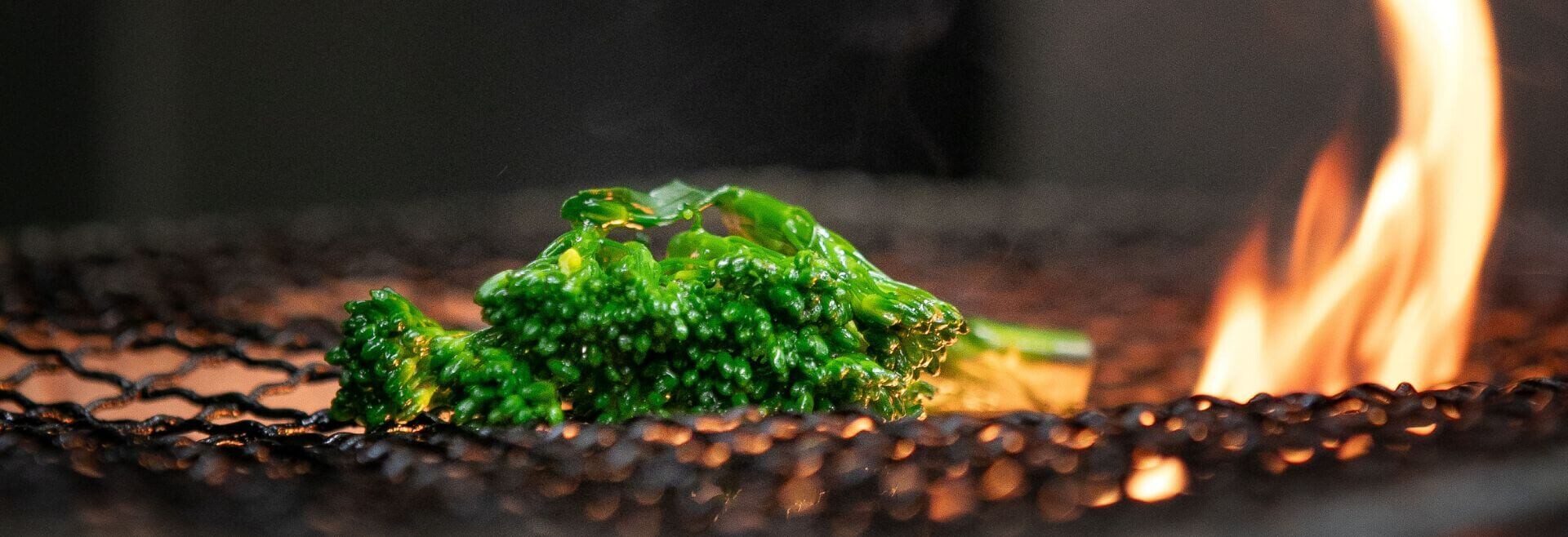
Instead of relying on ready-made textures and predetermined flavor profiles, we at Bonvivant rely on the traditional and modern tools of pure culinary craftsmanship: fermentation, controlled aging, open fire, precise cold, and above all, time. We build flavor and consistency from scratch, layer by layer. When we develop a dish for our plant-based menu, we utilize the natural physical and chemical properties of the vegetables and intensify them through artisanal processes until they reach their own powerful complexity. We do not add artificial flavors; instead, we coax out the aromas that have always slumbered within the plant.“Pea protein is a great alternative for quick cooking at home. In the restaurant, however, we want to tell the story of a specific soil, the weather, and the pure vegetable, completely free of laboratory conditions.”
Take beetroot, for example: we cook it for hours in a salt crust to concentrate its natural sweetness and moisture. Afterwards, we let it dry under controlled conditions for several days, which changes its texture and gives it an almost meaty, incredibly dense bite. Finally, we smoke it over selected, aromatic wood. The result is not a meat substitute. It does not taste like beef, nor does it taste like pork. It is a transformed beetroot that defines an entirely new, independent culinary category through its density, smoky sweetness, and concentrated earthiness. Similarly, we do not use king oyster or button mushrooms to imitate chicken. Instead, we extract their deep, natural umami through days of braising, roasting, and reducing to create sauces with an intensity, depth, and shine that easily rival classic, meat-based jus. This is not a substitute, it is the evolution of vegetable flavor.
The Alliance with the Farms: Nature over Standardization
Our conscious decision to skip the convenient standard products of the food industry forces us into a radical closeness to the ingredient and to nature. If you do not source ready-made proteins from a wholesale market, you have to know exactly which soil yields what and when. Our menu is the direct reflection of our close alliance with small, organic farms in Brandenburg. This collaboration is a great gift for us, but it is not always comfortable. It means we have to work with whatever the weather and the earth give us in that specific week. If an early spring frost delays the first harvest, we cannot simply switch to frozen substitute goods. We have to react creatively in the kitchen and make the best out of what is available.This imperfection of nature is our greatest source of inspiration. A carrot that has grown slowly in the sandy soil of Brandenburg possesses a different density and a completely different sugar-to-acid ratio than intensively farmed, uniform produce. We do not want to blur these fine differences or hide them behind standardized flavor profiles. We want to celebrate them. Guests at Bonvivant taste the year, the weather, and the region. While meat substitutes have the brilliant property of tasting exactly the same and reliable anywhere in the world, we want the exact opposite in the restaurant: to bring the fleeting, unique moment of the season onto the plate.
The Language on the Menu and the Confidence of the Plant
Another reason why we choose to forgo meat imitations is a deep sense of respect for the product. In the culinary world out there, a peculiar language has developed: you find terms like the "Vöner" (vegan kebab), "Veggie Salami," or "vegan fillet." For orientation in the supermarket, this makes perfect sense because everyone immediately knows what is meant and how to use the product. But we believe that vegetables have become confident enough to appear under their own names. A carrot or a kohlrabi no longer needs a meaty pseudonym to prove that it can taste fantastic.When we constantly present the plant as a substitute for something else, we make it smaller than it actually is. We condition the brain to always look for the familiar taste of meat instead of engaging with the fascinating, unique flavors of the vegetable itself. Our neighborhood crowd in Schöneberg brings exactly this curiosity with them. Our guests are not looking for deceptive packaging or the mere repetition of the same old flavors; they want to embark on a true sensory adventure. Bitter notes, complex interactions of acidity, tart herbal tones, and deep, earthy flavors are the primary tools we work with in the dining room. For us, it is all about discovering flavor horizons that you haven't experienced in daily life.
Two Paths, One Shared Philosophy
At the end of the day, this is not a dogmatic debate, but rather about two different paths that each have their own justification. The modern food industry, with its substitute products, offers a well-functioning, environmentally friendly alternative for the broad masses in everyday life and that is a massive step forward, especially compared to destructive factory farming.At Bonvivant, on the other hand, we dedicate ourselves to the pure, unvarnished, and artisanal diversity of nature. We want to enrich culinary culture by preserving traditional cooking techniques, supporting the biological diversity of our Brandenburg farmers, and showing our guests how exciting the original can taste, with all its facets, straight from the field to the plate.
FAQ's - Frequently Asked Questions
Does Bonvivant generally dislike meat alternatives?No, not at all. Modern substitute products are technologically very well made, taste great, and fulfill an extremely important function in daily life. They make it easy for people to reduce their meat consumption sustainably, which is always the better choice compared to factory farming. We view these products as a sensible option for daily nutrition, but simply choose a purely artisanal path for our restaurant concept.
Why don't you use them in the restaurant if they are a good alternative?
Because our focus at Bonvivant is on creative craftsmanship, seasonality, and exploring the pure taste of vegetables. A substitute product copies something already known. However, our guests come to us looking for experiences they do not yet know and cannot simply buy in a supermarket. We want to show the immense depth you can bring out of a simple carrot or kohlrabi without disguising it as meat.
How do you create deep flavors (umami) without meat and without substitute products?
Through the intensive use of traditional and modern kitchen techniques. We work extensively with fermentation, making our own kojis, miso pastes, and kombuchas. We roast vegetables intensely to generate powerful roasted aromas, reduce sauces over several days, or harness the natural flavor power of dried mushrooms, seaweed, and ripe vegetable varieties. This creates deep, complex flavor profiles in a completely natural way.
Is your menu also suitable for people who usually enjoy eating meat?
Yes, absolutely and explicitly. Because we do not put bland compromises on the plate, but rather flavor-intensive, culinarily dense, and aromatically complex dishes, even passionate meat eaters will not miss a thing. Our goal is not to morally ban meat, but to prepare vegetables in such an exciting and micro-precise way that the question of meat or meat substitutes plays no role at all throughout the entire evening. Enjoyment takes center stage, not dogma.