
And something else happens during the warm months: on summer vacation, the ripe tomato at the market, the fresh fig straight from the tree, or the olive in the sidewalk café tastes so intense, vibrant, and unforgettable like nowhere else during the rest of the year.
None of this is imagination, nor is it a pure feeling of romance down to the holiday mood. It is the measurable result of a fascinating mix of human evolutionary biology, neurochemistry, and sensory psychology. When the seasons change, our entire system changes. For a gastronomy that aims to accompany people at eye level and create sensory experiences, this means: it must decode the biological laws of summer to create dishes that match this exact physical and mental state.
The Thermoregulation Trap: Why Appetite Shrinks in Summer
To understand why our culinary desires in July differ so radically from those in January, one must look at the body's internal energy balance. Every time we consume food, our organism burns these fuels. In medicine, this biochemical process is called postprandial thermogenesis, the production of internal body heat during the digestion and metabolization of food.In winter, this thermal side effect is highly welcome, as it helps us like an internal heater to keep the vital core body temperature stable. In summer, however, any additional internal heat source is an acute strain on the system. The brain permanently registers the outside temperature via the sensors on the skin and signals the hypothalamus, our central control center for hunger, satiety, and temperature regulation, to deliberately downregulate food intake. The feeling of hunger drops.
The body reacts particularly strongly to complex proteins and heavy, saturated fats. Their molecular breakdown in the gastrointestinal tract is hard work and generates the most digestive heat. Carbohydrates and plant structures, on the other hand, are processed much more efficiently and with significantly less thermal effort.
At the same time, the organism continuously loses water and essential electrolytes such as sodium, potassium, and magnesium through sweating. As a result, our instinct guides us specifically toward foods that have an extremely high fluid and mineral content. We unconsciously look for cellular water, for vibrant fruit acids that activate salivation, and for a subtle saltiness that compensates for the mineral loss.
The Phenomenon of Olfactory Breadth: Why Summer Air Changes Taste
Another often overlooked factor is the physics of the air that surrounds us. For the most part, we do not perceive aromas via the taste buds on the tongue, but retronasally, meaning via the throat up to the olfactory mucosa in the upper nasal cavity.For aroma molecules to fly at all and detach from a dish, they need heat.
In summer, the warm ambient air is full of volatile organic compounds. The scent of dry grass, heated earth, ripe fruits, or blooming linden trees in the neighborhood triggers our olfactory system uninterruptedly. Since our olfactory receptors are permanently stimulated in the background during summer, our sensory expectation is set to a much higher frequency.
A dish that convinces at the table in winter through its heavy, dense, and isolated texture quickly appears dull, clumsy, and one-dimensional in the summer air. Summer demands equally volatile, ethereal, floral, and bright aroma partners that harmonize with the lightness of the air and can assert themselves against the olfactory backdrop of the environment.
The Psychology of Holiday Taste: The Brain Eats in Context
In addition to pure biology, psychology plays a massive role. The phenomenon that food tastes more intense to us in summer or on vacation is closely linked to our stress level. When the cortisol level in the body drops because the days get longer and we switch to relaxation mode, the fragile neuronal processing of sensory stimuli in the brain changes.Under everyday stress, the human brain radically filters out sensory details to focus on what is supposedly essential. In the relaxed summer state, however, this filter opens. The release of dopamine during new discoveries ensures that the synaptic connection works more intensively. We perceive the fine acidity of a tomato, the texture of a leaf, or the delicate aroma of a herb oil much more contrastingly. The taste becomes three-dimensional.
In addition, we tend to eat slower in summer, linger more, and draw the act of enjoyment into the evening. Time turns from a pressing stress factor into a creative tool for enjoyment. A modern gastronomy that reacts to this state must not tire the guest with rigid, stiff procedures, but must absorb, appreciate, and culinarily engage this relaxed emotional openness.
The Transition: How Fine Dining Translates These Laws
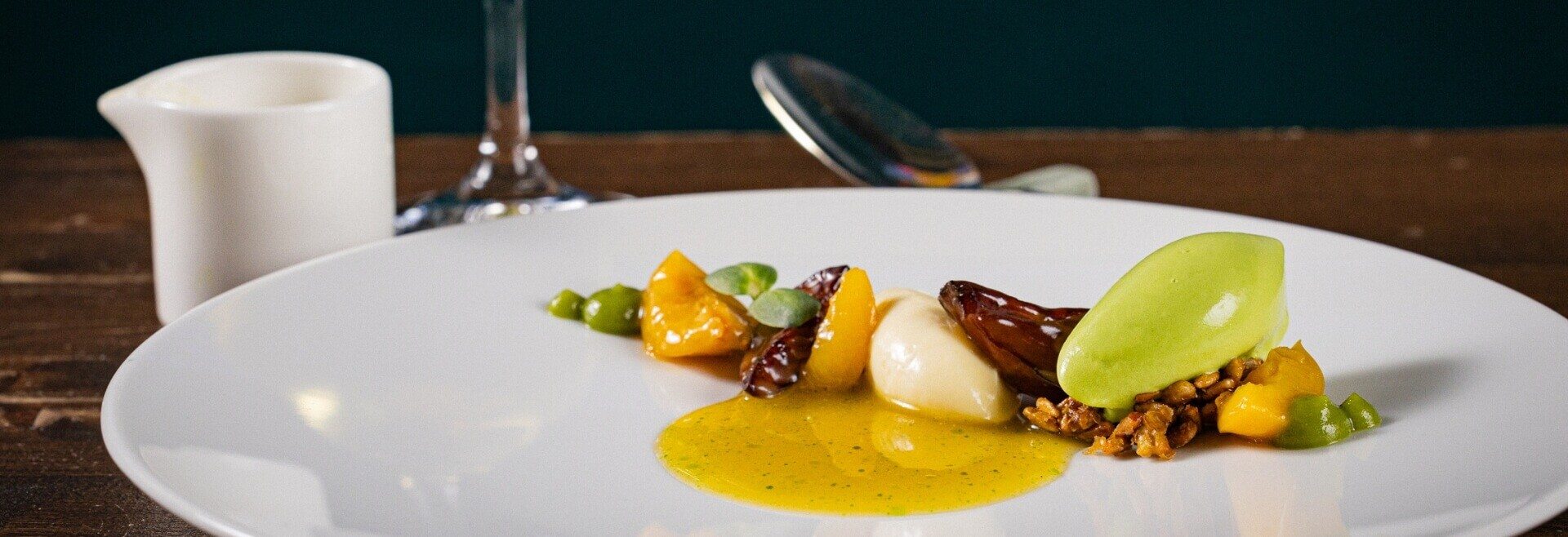
Exactly at this interface between biology, physics, and psychology, modern, progressive gastronomy is born. The art consists in taking the body's biological desire for lightness and freshness absolutely seriously without sacrificing the complexity, craftsmanship, and depth that people expect from a sophisticated restaurant visit. A plate must not burden the organism, but under the guise of lightness, it must never bore it either.At Bonvivant in Berlin-Schöneberg, this realization forms the solid foundation for all summer creations. As an acclaimed Michelin-starred restaurant and consistently vegan pioneer, we stand for a culinary concept that completely dispenses with heavy animal proteins, bone stocks, cream, or butter. In summer, this philosophy proves to be a maximum head start: where no heavy animal fats exist, the kitchen does not have to laboriously scale down or leave anything out. The award by the Guide Michelin underlines that plant-based fine dining is redefined here. The vegetables, wild herbs, and fruits of the region are the unrestricted main characters from second one.
Summer Cuisine at Bonvivant: Focus on the Essentials
Instead of changing the fine nuances of summer vegetables through hours of cooking, our kitchen team at Bonvivant works with precision and respect for the product. Young carrots, fresh peas, or tomatoes are prepared in such a way that their own character is preserved. The goal is a menu that challenges the palate without making the body sluggish.The necessary depth and mouthfeel that characterize a star-level fine dining menu are created entirely from plants. Through the precise interplay of intense vegetable reductions, cold herb oils, and the natural creaminess of nuts or seeds, the kitchen creates a structure on the plate that completely dispenses with animal fats. It is a cuisine that lives from freshness, texture, and clarity, perfectly matched to the dynamics of the warm months.
| Sensory Component | Craftsmanship at Bonvivant | Effect on the Guest |
|---|---|---|
| Seasonal Craft | Precise cooking times and the focus on the inherent taste of the vegetable. | Creates an intense, unadulterated aroma without heavy digestive work. |
| Plant-based Structure | Use of seeds, nuts, and cold oils for density and creaminess. | Delivers an elegant mouthfeel that balances the palate. |
| Freshness & Acidity | Targeted use of citrus zest, verjus, or artisanal vinegars. | Stimulates salivation, vitalizes, and cleanses the palate after every bite. |
The Symbiosis with the Bar: The Menu Extended in the Glass
The concept of summer enjoyment at Bonvivant works so seamlessly only because the border between kitchen and bar is completely dissolved. The drink pairing, whether with alcohol or as an independent, highly complex non-alcoholic variant, is thought out together with the dishes right from the start. The fact that a Michelin-starred restaurant operates its bar culture at absolute eye level with the kitchen makes the experience unique in Berlin.In summer, this means a close coordination of the aroma profiles. The bar works with homemade essences, fine herbal distillates, and perfectly balanced syrups to give the drinks the necessary structure and length. Instead of overpowering the guest with heavy alcohol or plump sweetness, the cocktails set refreshing counterpoints or extend the aromatics of the plate. When a herb-forward course meets a perfectly matched drink, a harmonious interplay is created that makes the entire evening feel like a single casting.
The Neighborhood as a Vibrant Stage: Urban Fine Dining
Finally, the backdrop of Berlin-Schöneberg fits into the evening as the final ingredient. True fine dining in summer demands breaking old, stiff conventions. When the large windows are open, the music softly drifts outside, the shakers at the bar beat rhythmically, and the murmur of voices of the people on the outdoor seats merges with the mild evening breeze, the menu loses any form of distance.During the summer months, Bonvivant becomes a place where star-level craftsmanship and the absolute casualness of urban life flow seamlessly into each other. The guest does not have to work through any expectations, but can simply let themselves drift. It is the pure, unadulterated, and uncompromising taste of the season, served with lightness, sense, and passion right in the heart of the neighborhood.
FAQ's - Frequently Asked Questions
Is the culinary offer at Bonvivant always completely vegan?Yes, our entire menu and the accompanying drinks are 100% plant-based. As an excellent Michelin-starred restaurant, we consistently and out of conviction dispense with meat, fish, dairy products, eggs, or honey. This clear line allows our kitchen to focus without distraction on the maximum taste potential of vegetables, herbs, grains, and mushrooms and to set new standards in craftsmanship.
Why does Bonvivant use more bitter aromas in summer?
Bitter substances are a biological blessing for the body at high temperatures. They stimulate the taste buds in the back area of the tongue and immediately send signals to the gastrointestinal tract to boost the production of digestive juices. Since the heat makes the digestive system sluggish, subtle bitter notes (such as from wild herbs, chicory, or bar essences) have an extremely liberating effect, balance natural sweetness, and extend the taste in the mouth.
Are warm dishes also served in the summer menu?
Yes, the play with temperatures is essential for the dynamics of a menu. A purely cold meal would thermally overwhelm the stomach, as the body would have to expend a lot of energy to heat the food inside to core body temperature, paradoxically, this causes sweating and internal heat. The kitchen specifically combines cold, fresh elements with warm, precisely tempered components on the plate to keep digestion in perfect balance.
Where do the ingredients for the summer menu come from?
We work closely with a fixed network of regional organic farms, nurseries, and producers from the Berlin area and Brandenburg. Thanks to these short delivery routes, the vegetables often land in our kitchen just a few hours after harvest. This is how we guarantee that the sensitive essential oils, the natural freshness, and the crisp structure of the plants arrive on the plate without any loss of quality.
How does the non-alcoholic pairing in summer differ from the classic version?
Our non-alcoholic pairing is an independent craft product on star level. It is calculated to be extremely dry and relies on fresh acids from verjus, bitter notes, and fine-pearled carbonation instead of sweet fruit juices. As a result, it effectively quenches thirst in summer, cleanses the papillae after every bite, and transports the aromas of the menu with the same elegance and density as an alcoholic drink.