


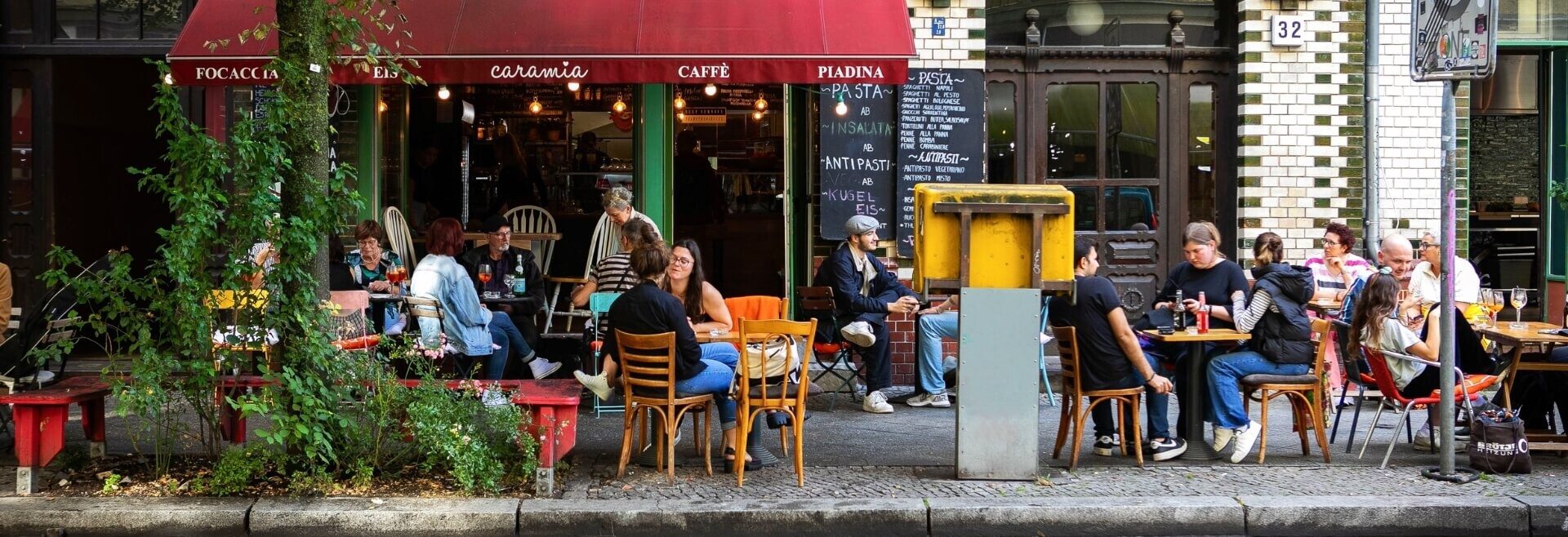
More precisely: towards Schöneberg. Between Nollendorfplatz, the Akazienkiez, and Goltzstraße pulsates a unique culinary dynamic that has grown organically over decades. Schöneberg possesses what cannot be artificially created: lived history, an unagitated character, and a deep-seated serenity.
The district has always been a magnet for free spirits and nonconformists. In the 1970s, David Bowie and Iggy Pop lived on Schöneberg's Hauptstraße. Here, the queer emancipation of Europe was significantly driven forward, and here, a bourgeois West Berlin elegance has always met an unconventional bohème. This mixture is reflected directly on the plates of the neighborhood. Schöneberg tastes of diversity, international immigration history, and genuine cosmopolitanism.
Winterfeldtplatz: The Heart of Berlin Market Culture
You cannot understand the culinary art of Schöneberg without talking about Winterfeldtplatz. Every Wednesday and Saturday, the square around the historic St. Matthias Church transforms into what is probably the most famous weekly market in the capital. Founded in the late 19th century, the Winterfeldtmarkt is the living room of the district.
Here, the agricultural splendor of the region unfolds. Alongside fresh vegetables from Brandenburg farmers, handmade cheese from the surrounding countryside, and fresh fish, there are stalls with flowers, oriental spices, and Mediterranean pastes. The shouting of the vendors, the smell of freshly brewed coffee, and ripe herbs shape the atmosphere. For us at Bonvivant in the neighboring Goltzstraße, this market is a constant source of inspiration. It reminds us of what eating is all about at its core: the product, the craft, and the coming together of people of all stripes. The market grounds the kiez and keeps the direct connection to regional agriculture alive.
The Invention of Diversity: Culinary Pioneering Work
Schöneberg has a long tradition of tearing down culinary barriers. In the 1980s and 90s, the kiez around Akazienstraße was the birthplace of a new, international culinary culture in West Berlin. Some of the city's first authentic Thai, Vietnamese, and Middle Eastern restaurants opened here, showing Berliners how complex the world of flavors is beyond classic home cooking.
This pioneering work continues to this day. Schöneberg offers the ideal breeding ground for restaurateurs who choose to walk new paths. The fact that we at Bonvivant combine an ambitious, purely plant-based fine dining cuisine with a progressive bar culture is also thanks to the openness of this neighborhood. The people here have a fine sensor for quality, but appreciate the uncomplicated. They want to eat excellently without having to pretend.
“In Schöneberg, it is not about seeing and being seen. What counts here is that the quality on the plate is right and the hospitality comes from the heart.”
The Psychology of Strolling: Why the Kiez Invites You to Linger
There is an urban planning phenomenon that makes the culinary arts in Schöneberg so intensely tangible: the structure of the streets. The Akazienkiez and Goltzstraße are made for classic strolling, the slow, enjoyable walking around. The wide sidewalks are lined with small, owner-managed specialty shops, bookstores, old delicatessens, and cafes.
This decelerated pace changes our perception. Anyone strolling through the kiez perceives the surroundings more consciously. You smell the fresh bread from the artisanal bakeries, the essential oils of the flower shops, and the roasting aromas of the coffee roasters. The brain switches to discovery mode. The high density of culinary stations ensures that eating here is a fluid part of everyday life. You drink an espresso on the corner, buy a piece of matured cheese for home, and end up at the restaurant in the evening for a large menu. Culinary art in Schöneberg is not an isolated event that you travel extra for, it is the heartbeat of daily life.
The Mix Makes the Taste
What distinguishes Schöneberg culinarily from many purely tourist districts is the social mix at the tables. There is no monoculture here. In the restaurants, the original Berliners who have lived in the kiez for 40 years sit right next to international creatives, families, and food enthusiasts from all over the city.
This diversity at the tables creates a very special, relaxed energy in the room. It nips any culinary snobbery in the bud. When a restaurant tries to appear exclusive and exclusionary, it is rarely accepted in Schöneberg. Here, you win the hearts of the people with honesty, warmth, and technical precision. We do not cook for an detached elite, but for the living reality of this neighborhood.
An Invitation to the Senses
The Schöneberg Kiez invites you to leave the stress of the metropolis at the district border and to fully engage with the here and now. Whether you stroll across the Saturday Winterfeldtmarkt, stop off at a small wine bar, or discover the creative diversity of modern vegetable cuisine with us in Goltzstraße; Schöneberg welcomes you with open arms and a full plate.
Come by and experience the unique blend of tradition, tolerance, and culinary courage. We look forward to being a part of your kiez discovery.
FAQs - Frequently Asked Questions
- What makes the Winterfeldtmarkt in Schöneberg so special?
- The market on Winterfeldtplatz is one of the oldest and largest weekly markets in Berlin. Every Wednesday and Saturday, the entire kiez meets here. In addition to classic regional products from Brandenburg, it offers a large variety of international specialties, delicatessen, and flowers. It is the culinary centerpiece of Schöneberg.
- How is the history of Schöneberg reflected in the gastronomy?
- Schöneberg has always been a melting pot for free spirits and different cultures. This traditional cosmopolitanism meant that the kiez became a pioneer for international, authentic cuisine in West Berlin starting in the 1980s. People here appreciate the special and like to break with old culinary dogmas.
- Is a culinary excursion to Schöneberg also worthwhile during the week?
- Absolutely. While the market on Saturday is the bustling highlight, Goltzstraße and the Akazienkiez also offer an excellent density of owner-managed cafes, small delicatessens, wine bars, and restaurants during the week. The atmosphere is relaxed on weekdays and invites you perfectly to explore.
- Does the upscale, plant-based cuisine of Bonvivant fit into a traditional kiez?
- Perfectly. Schöneberg loves quality, but detests stiffness. Our interpretation of fine dining, purely vegan, technically at the highest level, but served in the relaxed, warm atmosphere of a real kiez establishment, captures exactly this Schöneberg lifestyle of sophisticated serenity.
- Can you also find good artisanal products in Schöneberg for home?
- Yes, the kiez is a paradise for conscious shopping. In addition to the weekly market, there are numerous specialized retailers, from traditional coffee roasters to small cheese shops and fine manufacturers for spices and olive oil. The love for the honest, artisanal product is actively supported by the residents.