

In this article, we explore why the Lausitz region is suddenly producing mineral masterpieces and how we utilize these discoveries for vegan fine dining at Bonvivant.
From Brandenburg's Sandy Soils to the Schöneberg Counter: An Underrated Region Conquers Berlin's Fine Dining Scene
When people think of premium German wine, they usually envision the steep slate slopes of the Mosel or the sun-drenched terraces of the Palatinate and Baden. For a long time, Brandenburg appeared in this exclusive circle as a mere footnote at best. The soils were deemed too sandy, the continental climate too extreme, and the modern winemaking tradition too young.
Yet, beneath the surface of the Brandenburg sand jar, a radical transformation is taking place, redrawing the map of German viticulture at breathtaking speed.
Yet, beneath the surface of the Brandenburg sand jar, a radical transformation is taking place, redrawing the map of German viticulture at breathtaking speed.
Driven by noticeable climatic shifts and carried by courageous pioneers, the region surrounding Berlin is developing into a highly exciting birthplace for characterful, mineral wines. That this evolution pairs perfectly with modern, purely plant-based cuisine is no coincidence.
For us at Bonvivant, it is the logical consequence of a culinary concept that thinks regionality, sustainability, and elevated gastronomy through to the very end. As a premium vegan restaurant in Berlin, we are bridging the gap from the fields and vineyards of Brandenburg directly to the counter in Schöneberg.
For us at Bonvivant, it is the logical consequence of a culinary concept that thinks regionality, sustainability, and elevated gastronomy through to the very end. As a premium vegan restaurant in Berlin, we are bridging the gap from the fields and vineyards of Brandenburg directly to the counter in Schöneberg.
Climate Change as a Catalyst: New Rules for Viticulture
Global warming presents the winegrowing world with existential challenges. While traditional regions in Southern Europe increasingly struggle with extreme heat, sunburned grapes, and a rapid loss of vital acidity in the wine, the climatic boundaries for quality winegrowing are shifting inexorably northward. What was historically classified as a cool climate region now benefits from an increase in sunshine hours and a reliable ripening of the grapes.
Brandenburg, with its distinctly continental climate, is experiencing exactly this turning point. Summers are becoming hotter and drier; growing seasons are lengthening. Grape varieties that just a few decades ago stood little chance of reaching full physiological ripeness in these latitudes now find optimal conditions.
Yet, heat alone does not create a premium wine. The secret of the new Brandenburg wine identity lies in the fascinating interplay between altered temperatures and unique, often underestimated soils.
Yet, heat alone does not create a premium wine. The secret of the new Brandenburg wine identity lies in the fascinating interplay between altered temperatures and unique, often underestimated soils.
From Open-Cast Mine to Terroir: The Miracle of the Wolkenberg
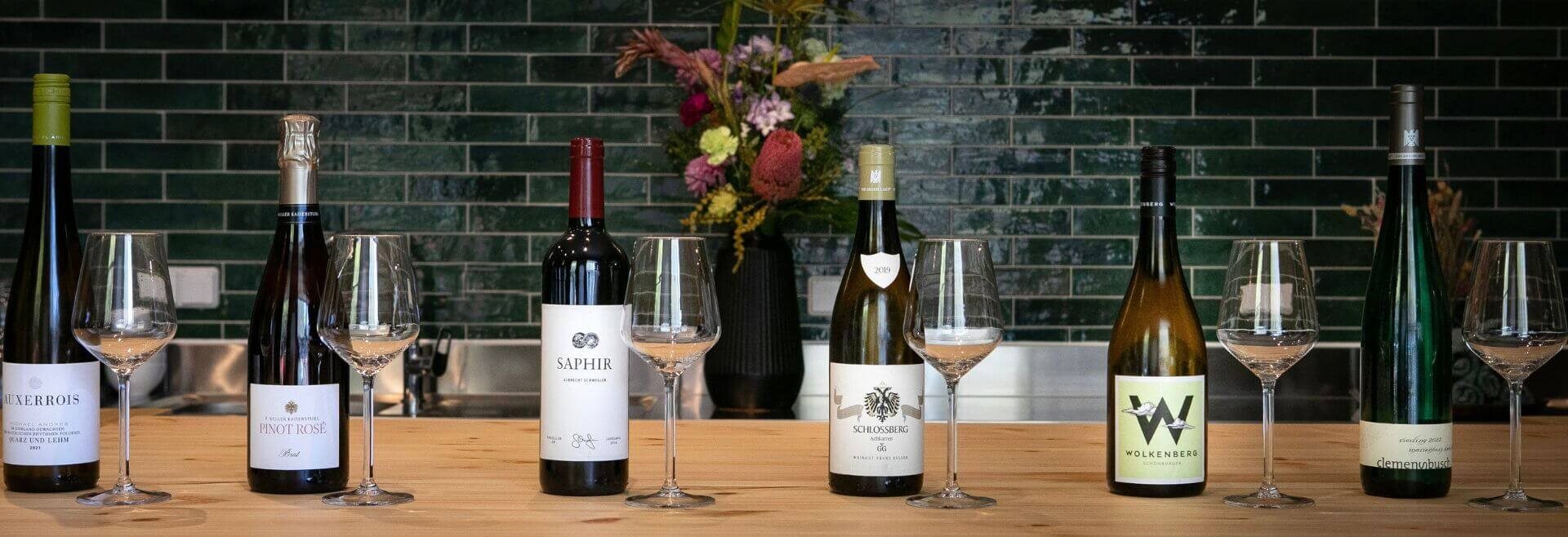
To understand why the bar and the kitchen at Bonvivant are so closely intertwined with Brandenburg viticulture, it is worth looking toward the Lausitz region. More precisely, at the Wolkenberg Winery. Where vines root deep into the earth today, giant excavators tore through the Lausitz Welzow-Süd open-cast lignite mine just a few decades ago. As part of the recultivation process, an artificial wine terrace was created here, a stroke of absolute genius for viticulture.
The vines grow on a barren, extremely mineral mixture of sandy loam, ice-age glacial till, and deep sedimentary layers. This soil forces the vines to dig their roots deep into the earth to access water and nutrients. The result in the glass is breathtaking: the wines from Wolkenberg Winery, whether it is their finesse-rich Pinot Blanc, the crisp Pinot Gris, or the aromatic Red Riesling, captivate with a razor-sharp, vibrant minerality. They possess a structure normally found only in classic limestone or slate regions.
This pronounced minerality, paired with an elegant, fresh acidity structure, makes Brandenburg wine the perfect partner for our plant-based culinary creations. When earthy vegetables, fermented mushrooms, and complex herbal aromas dominate the plate, the wine in the glass needs precision and verve, not heavy opulence. It must refresh the palate, elongate the flavors of the dish, and set a clear, animating contrast. This is precisely what these wines from Berlin's immediate neighborhood deliver at an absolute world-class level.
The Misunderstanding in the Glass: Why Wine is Often Not Vegan
Anyone diving deeply into sustainable indulgence for the first time inevitably stumbles across a crucial question: why isn't wine automatically vegan? Grape juice, yeast, time, that is all it takes, right?
The reality in the wine cellar often looks quite different.
In traditional winemaking, the primary goal after fermentation is clarity and stability. A freshly fermented wine is naturally cloudy, packed with suspended particles, yeast residues, and harsh tannins.
The reality in the wine cellar often looks quite different.
In traditional winemaking, the primary goal after fermentation is clarity and stability. A freshly fermented wine is naturally cloudy, packed with suspended particles, yeast residues, and harsh tannins.
To render the wine crystal clear and commercially appealing in the shortest time possible, many wineries have used animal-derived processing aids as so-called fining and clarifying agents for centuries. The process relies purely on physical attraction:
- Egg white: Traditionally added to the wine barrel to bind excess, harsh tannins and cloudy sediment, causing them to sink to the bottom
- Gelatin: Sourced from animal connective tissue, it serves to quickly clarify the liquid and strip away bitter compounds
- Isinglass: Derived from the dried swim bladders of sturgeon fish, this agent is predominantly used in white wines to filter out even the smallest suspended particles with high efficiency
- Casein: The primary protein found in milk is utilized to correct sensory flaws or slight discolorations in white wine
Even though these substances are theoretically filtered out entirely after the process, it represents a massive deployment of animal products in the manufacturing process. For a strictly plant-based fine dining concept like ours, the utilization of such wines is absolutely unimaginable. Our philosophy must be as pure in the glass as it is on the plate.
The Direct Comparison: Traditional vs. Organic-Vegan Vinification
To make the differences in the wine cellar tangible, the following overview demonstrates how contrastingly these two philosophies operate:
| Criterion | Traditional Winegrowing | Organic-Vegan Winegrowing (e.g., Wolkenberg) |
|---|---|---|
| Soil Fertilization | Frequent use of synthetic chemical fertilizers or organic fertilizers derived from slaughterhouse waste. | Purely plant-based compost, green manure, and the active promotion of natural biodiversity. |
| Wine Clarification | Utilization of animal proteins (gelatin, isinglass, egg white) for rapid fining and clearing. | Natural sedimentation achieved through time, or purely mineral clay (bentonite) if required. |
| Vine Stability | Heavy reliance on chemical-synthetic pesticides in the vineyard to secure high crop yields. | Strengthening the vine's inherent immune defenses using organic and biodynamic preparations. |
| Production Speed | Focus on rapid bottling and early market readiness via technical and artificial interventions. | The wine is granted the necessary peace and maturation time on its natural yeast in the cellar. |
The Art of Organic-Vegan Vinification: Time Instead of Gelatin
Organic-vegan winemakers prove daily that these animal-derived aids are completely redundant in modern quality viticulture. The key to elimination lies in two factors: artisanal precision in the vineyard and the luxury of time in the cellar.
Instead of gelatin or isinglass, vegan estates harness natural sedimentation. Following fermentation, the wine is left to rest on its lees for months. Through gravity alone, the cloudy particles slowly sink to the bottom of the tank or barrel. This process demands patience, a resource frequently lacking in industrial mass production, but one that endows the wine with immense depth, creaminess, and natural stability.
If a gentle hand is needed in exceptional cases, vegan winemakers turn to mineral alternatives like bentonite; a natural clay earth that binds suspended particles purely physically, without endangering the flavor or the plant-based integrity of the wine.
If a gentle hand is needed in exceptional cases, vegan winemakers turn to mineral alternatives like bentonite; a natural clay earth that binds suspended particles purely physically, without endangering the flavor or the plant-based integrity of the wine.
Simultensously, the vegan approach in the vineyard transitions seamlessly into organic or biodynamic cultivation. A healthy, living soil, managed entirely without chemical-synthetic sprays and without synthetic fertilizers, produces grapes with a perfectly balanced inherent stability. These grapes carry everything needed for a great wine within themselves. They no longer require artificial corrections in the cellar.
Plant-Based Fine Dining at Bonvivant: Where Wine and Plate Converse
At Bonvivant, we do not view our wine list as an alibi or a standard fallback for guests who choose not to order a cocktail from Martin's liquid laboratory. The wine list is an equal, strictly curated pillar of our culinary universe.
When our kitchen team designs a new menu celebrating the flavors of the Berlin-Brandenburg region, the wine
pairing cannot afford to lag behind geographically or philosophically. Our commitment to a vegan restaurant goes far beyond merely omitting animal products; we want to demonstrate how profound and elegant plant-based fine dining can truly be.
When our kitchen team designs a new menu celebrating the flavors of the Berlin-Brandenburg region, the wine
pairing cannot afford to lag behind geographically or philosophically. Our commitment to a vegan restaurant goes far beyond merely omitting animal products; we want to demonstrate how profound and elegant plant-based fine dining can truly be.
Collaborating with regional producers like the Wolkenberg Winery is lived sustainability you can taste. The exceptionally short transport routes reduce our ecological footprint to a minimum. Far more critical, however, is the flavor symbiosis on the table: an organic-vegan Brandenburg Pinot Gris matured on karg Lausitz soil brings precisely the cool, puristic elegance that harmonizes magnificently with our dishes.
It never jostles into the foreground; it frames the dish, beautifully balances the fat structures of our plant-based emulsions, and sets a vibrant acid counterpoint to intense vegetable nuances like braised beetroot or fermented celeriac.
It never jostles into the foreground; it frames the dish, beautifully balances the fat structures of our plant-based emulsions, and sets a vibrant acid counterpoint to intense vegetable nuances like braised beetroot or fermented celeriac.
„A wine must never overrule a dish; it must answer it. When we create a purely plant-based fine dining menu, we search for wines that mirror the exact same artisanal depth and honest heritage as our ingredients on the plate. The märkische minerality is an absolute stroke of luck for this purpose.“
The Revolution Without Percentages: Alcohol-Free Premium Wines on the Rise
Because world-class flavor at Bonvivant is never tied to the presence of alcohol, we take the topic of climate-adaptive viticulture and vegan craftsmanship one decisive step further. The era when non-alcoholic wine was merely sticky-sweet, de-alcoholized grape juice is definitively over. A new generation of winemakers and manufactories is proving that alcohol-free wines constitute a serious, highly complex enrichment for the fine dining landscape.
The production demands extreme technological and artisanal skill. Utilizing gentle vacuum distillation, the alcohol is extracted from the finished base wine at very low temperatures below 30 degrees Celsius. This is crucial, as it protects the delicate, volatile aromas of the grape. Yet, since alcohol is a primary flavor carrier, these non-alcoholic expressions must be balanced through a masterly assemblage of acidity, texture, and fine botanicals to ensure they develop the identical viscosity and length on the palate as a traditional wine.
Our selection includes non-alcoholic wines that surprise even the most discerning palates with their multi-layered complexity. They offer an entirely equivalent form of enjoyment within our curated pairing options, proving that the wine list of the future is multifaceted, sustainable, and inclusive, completely free of compromises.
A Glimpse into the Future of Indulgence in the Akazienkiez
A look at the Brandenburg wine landscape reveals that climate change is forcing gastronomy and viticulture to pivot, while simultaneously opening up entirely new, fascinating horizons. The combination of courageous pioneering spirit, uncompromising organic-vegan craftsmanship, and an unbiased openness to non-alcoholic alternatives redefines luxury in the glass.
The next time you join us at Bonvivant, be it for our vibrant weekend brunch or our puristic dinner menu in the evening, ake a moment to explore the wine list. Immerse yourself in the adventure of Brandenburg viticulture and taste for yourself how much future, energy, and craftsmanship reside in the wines of our region. Our team is delighted to guide you in finding the perfect organic-vegan wine to harmoniously complete your plant-based fine dining expierience.
FAQ's - Frequently Asked Questions
- Can you taste a difference between vegan and traditional wine?
No, omitting animal-derived clarifying agents does not alter the varietal characteristics of the grape negatively. On the contrary: because organic-vegan premium wines, such as those from the Wolkenberg Winery, frequently spend significantly more time resting on their natural lees and undergo less technical manipulation, they often taste much more precise, characterful, and reflect their unique terroir with greater purity.
- Why is regionality (Berlin-Brandenburg) in wine so vital for Bonvivant?
As a certified sustainable, plant-based restaurant, minimizing our ecological footprint is paramount. Wine from the Lausitz region requires no cross-continental shipping. Furthermore, the cool, mineral notes distinctive of Brandenburg viticulture harmonize flawlessly with the earthy, root-centric, and herbal nuances of our modern kitchen.
- Does Bonvivant offer a completely alcohol-free wine pairing?
Yes, absolutely. Outstanding indulgence is entirely decoupled from percentages at our house. We curate an exquisite selection of alcohol-free premium wines and artisanal creations de-alcoholized via gentle vacuum distillation. These operate on a completely equal footing with our traditional pairings, precisely calibrated to match each individual course of the menu.
- Are all wines on your list organically certified?
Our primary focus centers squarely on organically and biodynamically operating estates that craft their wines in total harmony with nature. It is vital to us that winemakers treat the soil as a living organism—because only a vital, healthy soil can yield the vibrant energy and sharp minerality we seek for our fine dining experience.